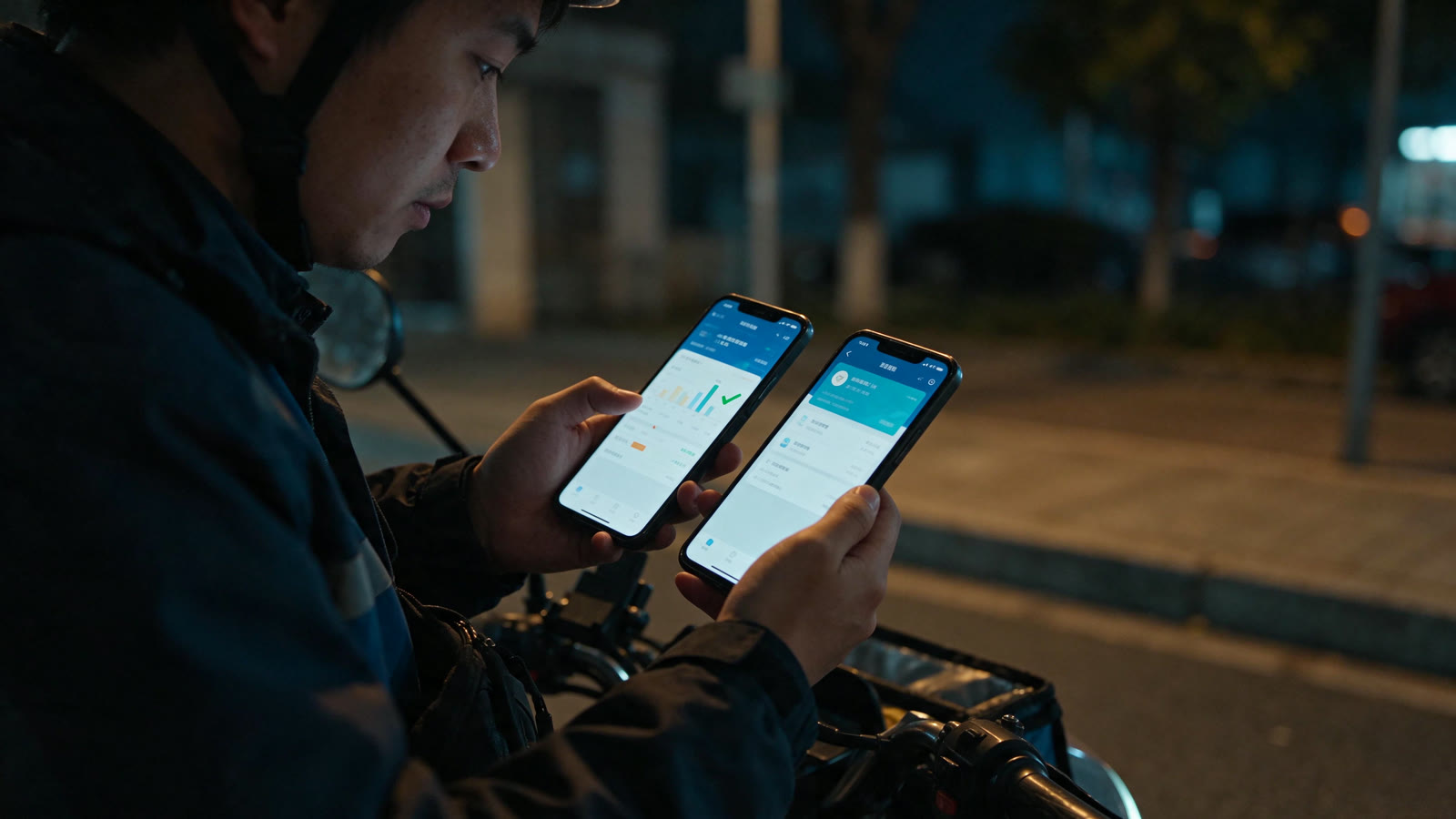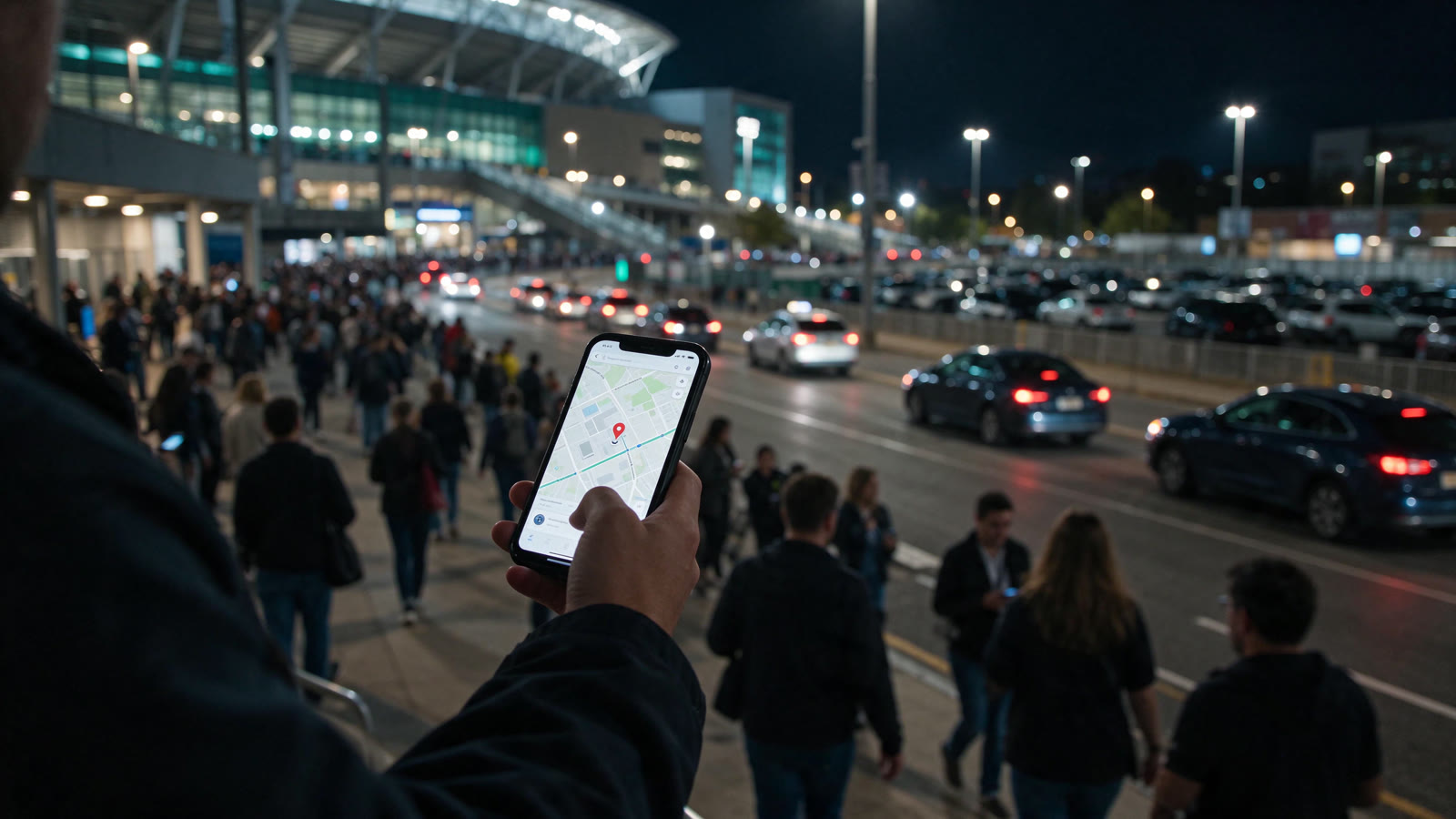
An arrival text passes through three hands: your platform, the messaging provider and the customer's mobile carrier. The provider's reply of accepted covers only the first handover. If the sender registration has lapsed, carriers can filter the message, and the receipt that says so arrives later, on a separate channel the trip record never sees. The trip shows a notification sent. The customer saw nothing, and the result is logged as a no-show.
- Accepted means the provider took the message. Delivered is a later receipt, and so is filtered.
- A sender registration is an administrative record with an expiry date. Someone has to own it by name.
- Before upholding a no-show fee, check whether the arrival message was delivered.
Three hands, three statuses
When a driver, courier or technician arrives, the platform tells the customer. For customers with app notifications switched off, and for recipients who are not the account holder, that message is a text. It leaves your platform, is taken by a messaging provider, and is passed to the customer's mobile carrier for delivery to the handset.
Each handover has its own status. The provider answers your request at once with “accepted”. The carrier's verdict comes later as a delivery receipt: delivered, failed or filtered. An arrival flow written against the first answer never learns the second.
How a registration lapse silences them
Mobile carriers can require businesses that send texts to register who they are and what they send, and can filter traffic from senders whose registration is not current. Registrations lapse for dull reasons: a renewal notice goes to someone who has left, the company name on file changes, a new sending number is added without the paperwork. From that point the provider still accepts every message. The carriers drop them.
What this costs marketplaces in general has not been measured in public, and we will not guess. What can be described is how it plays out when it does happen. The driver arrives and waits. The customer, not knowing, does not come out. A timer expires, the trip is cancelled as a no-show and a fee is charged. The customer disputes it, truthfully saying nobody told them, and support refunds it as goodwill.
Why the dashboards stay green
- The messaging provider's API returns accepted for every request.
- The notifications service counts accepted as sent, and its success rate does not move.
- The trip record shows an arrival notification with a timestamp.
- No-show cancellations rise somewhat, and are read as customer behaviour.
- Support refunds disputed fees one at a time, each a reasonable call.
The records to put side by side
- delivery receipts by final status and by mobile carrier, day by day
- the sender's registration status in the provider's console, and the date it changed
- no-show cancellations for customers who rely on texts, against those who receive app notifications
- driver waiting time before cancellation
- fee disputes and their wording: “I was never told they were here”
The ordinary-looking tell is the split by channel. If no-shows rise only among customers reached by text, customers have not changed. The message has.
Nobody in this chain is present when a filtered text fails to appear. The driver assumes the customer was told. The customer cannot report a message they never received. The delivery receipt is the one record that knows, and it has to be stored against the trip to be of any use.
What it costs, and how to size it
The unit of loss is cancellations and refunded fees.
- Count arrival texts since the registration changed whose final receipt was anything other than delivered.
- Find the trips or orders they belonged to, and count those that ended as no-shows.
- Subtract the no-show rate you see when the arrival text is delivered. The remainder is the excess.
- Multiply by your contribution per trip, and add refunded fees, compensation for driver waiting time and any goods written off.
Why it comes back
Registration is set up once, at launch, by whoever was available. Each sending number, region and message type may carry its own record with its own expiry. Renewing the one that lapsed does nothing for the next, and the arrival flow still stops listening at accepted.
Questions worth asking this week
- Who, by name, owns each sender registration, and when does each expire?
- Are delivery receipts stored, and can they be joined to a trip?
- What does the arrival flow do when no delivered receipt comes back?
What fixes it, and who owns each part
- Notifications team: store the final receipt against the trip, alert on the delivered share by carrier, and fall back to another channel when no delivered receipt arrives in time.
- A named registration owner: a register of every sender record with its expiry, and renewal notices sent to a shared address.
- The messaging provider: an escalation with receipts and error codes by date.
- Support operations: refund no-show fees where the arrival text was not delivered, without waiting for a dispute.
- The support agent's next release: an eval case. It checks the delivery receipt before upholding a no-show fee, and never says “we notified you” when the receipt says otherwise.
Where Traxivo fits
Traxivo reads messaging delivery receipts, registration status, trip and cancellation records, fee disputes and agent traces through read-only connections and links them into one issue with a history. It recognises when a lapse has happened before, names the owners, and drafts the provider escalation and the refund list for a named person to approve. It does not send messages or renew registrations. Undelivered texts are one of the ten marketplace failure patterns it covers, and the accepted-but-not-delivered shape recurs across other industries.
The ten use cases on the Traxivo for Marketplaces page are the ones most mobility, logistics and marketplaces estates share. Your niche will have failures of its own. We build custom solutions for those on top of the same platform: connectors for the feeds only your niche has, detection for the pattern only your estate shows, and the loss counted in your own unit. The same approach extends to niches such as grocery and quick-commerce delivery, freight and last-mile brokerage, micromobility and rental fleets and home-services marketplaces.
Sources
- TechCrunch. Amazon agrees to pay consumers $309M in returns policy settlement, 2026.
- City of New York, Office of the Mayor. Mayor Mamdani Wins Record $131.5 Million From DoorDash for Delivery Workers, 2026.
- Federal Trade Commission. Walmart Agrees to $100 Million Judgment to Settle FTC, States’ Charges Over Deceptive Earnings Claims Related to the Company’s Spark Driver Delivery Service, 2026.
Every figure on this page comes from the published source it is linked to and describes the industry at large. None is a Traxivo or customer result.
Frequently asked questions
What is the difference between accepted and delivered for a text message?
Accepted is the messaging provider confirming it took the message from you. Delivered is a later receipt from the mobile carrier confirming it reached the handset. A message can be accepted and then filtered or failed, and only the receipt shows which.
Why would a carrier filter a legitimate arrival text?
Carriers can filter business texts from senders whose registration is missing or out of date, whatever the content. A lapse in that registration can therefore stop valid, expected messages without any change to the code that sends them.
How do I know whether no-show cancellations were caused by missed messages?
Join delivery receipts to trips and compare no-show rates where the arrival text was delivered with those where it was not. A gap that opens on the date the registration changed is strong evidence.
Stop rediscovering the same integration failure
Traxivo links the alerts, tickets and email threads your teams already produce into one history per issue, recognises when a fault returns, and drafts the follow-up with the evidence attached. Nothing is sent until a person approves it.
See how Traxivo works See Traxivo for Marketplaces